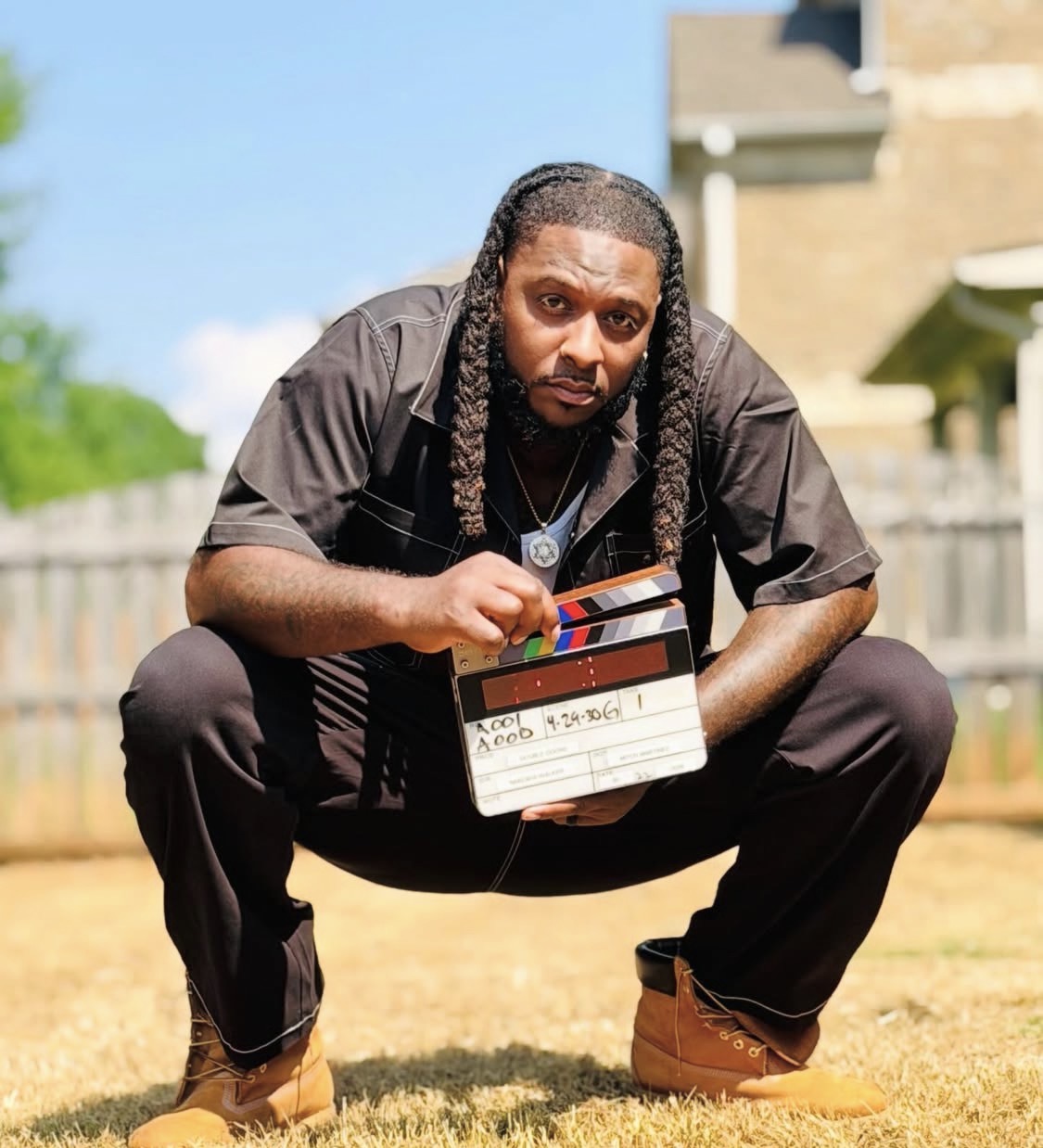
AyeKO looks comfortable in the frame because the work began before the camera arrived. Kertis Owens has built his screen identity through repeated appearances in independent urban film, learning how to enter a scene, hold attention and give another performer something useful to play against. The result is presence that reads as natural because the preparation is not.
His credits connect Milwaukee-made storytelling to a wider streaming audience. In 'Stolliez,' directed by Carvell Brooks, Owens plays TJ inside a crime drama rooted in the city. His later work includes 'Jada,' 'Tyrant: Like Father Like Son,' 'All About a Check 2,' 'Out of Darkness' and the 2026 series 'The Dirty C.' Each set creates another relationship, another lesson and another piece of evidence.
Owens identifies himself as an actor, director, writer and music artist. That combination is more than branding. Independent productions move quickly and reward people who understand what happens on both sides of the lens. A performer who can think about story, rhythm and production becomes more valuable than a face waiting for a close-up.
AyeKO's story belongs to a regional film movement that stopped waiting for a distant industry to explain it. 'Stolliez' places Milwaukee streets, language and pressure inside the narrative rather than treating the city as an anonymous backdrop. Owens's role as TJ becomes part of that address: the performance works because it understands the world around it.
Free streaming platforms now place independently produced crime dramas beside studio films on the same screen. A viewer may not know the budget, crew size or route to distribution. The work still has to earn attention frame by frame. Credits show forward motion, but writing and directing create a chance to shape the roles available to Owens and the performers around him.
For AyeKO, the strongest next chapter is not simply more appearances. It is a body of work with a recognizable standard: performances that feel prepared, projects that widen his responsibility and stories that can be traced back to the communities that made them possible. Built for the screen means understanding the screen as a workplace, a distribution system and an asset.